How to Specify Custom Forged Stainless Steel Flanges: A Complete RFQ and Quality Checklist
Short answer: a reliable custom flange quotation starts with service conditions, the governing standard, complete dimensions, material requirements, inspection scope, and documentation. A drawing alone is rarely enough. When these inputs are fixed before production, a custom flange manufacturer can control forging allowance, heat treatment, machining, testing, and traceability without risky assumptions.
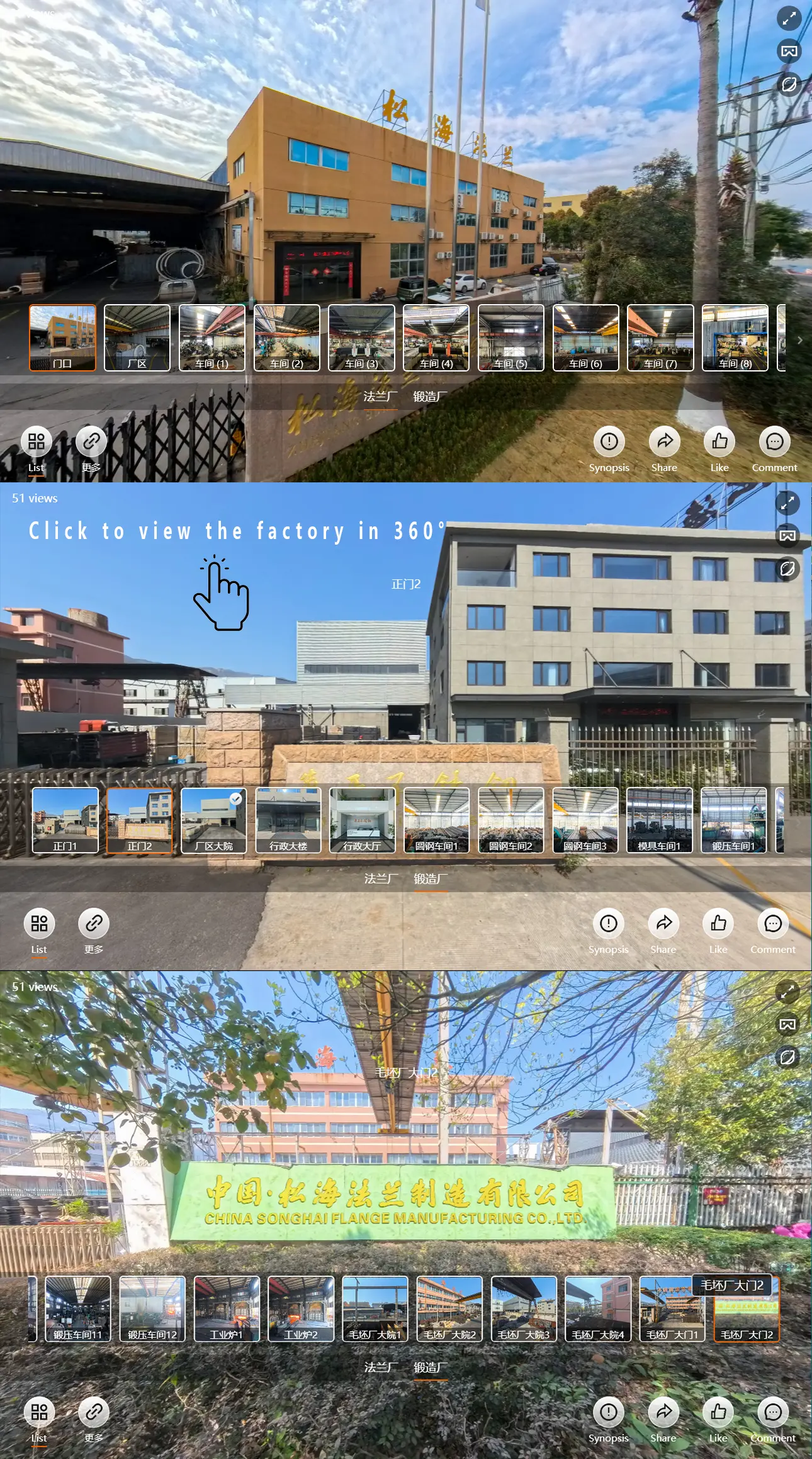
SongHai is a flange manufacturer in China producing standard and custom forged flanges for piping, pressure equipment, filtration, instrumentation, vacuum systems, and engineered connections. Use this checklist to compare suppliers on an equal technical basis.
1. Define the operating envelope
State design pressure, design temperature, process medium, corrosion allowance, cyclic loading, external loads, and design life. These conditions determine whether the project needs a weld neck flange, slip on flange, blind flange, plate flange, threaded flange, socket weld flange, lap joint flange, or long weld neck flange.
| RFQ input | Engineering purpose |
|---|---|
| Pressure and temperature | Establish rating, thickness, facing, and material strength basis |
| Fluid and environment | Define corrosion resistance, cleanliness, and sealing needs |
| Pipe size and schedule | Set bore and weld-end geometry |
| External loads and cycles | Support fatigue and stiffness review |
| Applicable code | Set dimensions, acceptance criteria, and documentation |
2. Identify the exact standard and edition
Do not specify only “ANSI flange” or “DIN flange.” Name the exact document, such as ASME B16.5, ASME B16.47, EN 1092-1, JIS B2220, GOST 33259, HG/T 20592, or a pressure-vessel drawing. Mark every deviation from the standard. Critical dimensions include outside diameter, bore, thickness, bolt circle, hole quantity and diameter, hub profile, overall length, facing details, and gasket-contact finish.
A professional industrial flange manufacturer should complete drawing and contract review before material release, resolving tolerances, units, bolt-hole straddling, weld preparation, datums, and facing orientation.
3. Specify material beyond the grade name
Common stainless grades include ASTM A182 F304/304L, F316/316L, F321, F347, duplex F51, and super duplex F53 or F55. Selection depends on chlorides, temperature, weldability, strength, and corrosion mechanism. A qualified stainless steel flange manufacturer should confirm specification, grade, product form, heat-treatment condition, and supplementary limits for carbon, ferrite, hardness, or intergranular corrosion.
Sour, low-temperature, hydrogen, oxygen, hygienic, or semiconductor service can require impact testing, NACE/ISO 15156 controls, PMI, ferrite measurement, passivation, special cleaning, or restricted marking materials.
4. Match the manufacturing route to service
A capable forged flange manufacturer treats forging and machining as one controlled route:
- Verify incoming heat number, chemistry, dimensions, and certificates.
- Control billet heating, deformation, reduction, and forging temperature.
- Apply the specified solution anneal, normalize-and-temper, or quench treatment.
- Rough-machine to remove scale and prepare inspection surfaces.
- Perform required UT, PT, MT, PMI, hardness, and mechanical tests.
- Finish-machine bore, hub, bolt pattern, facing, and weld end from defined datums.
- Reconcile markings, dimensions, reports, and packing before release.
5. Define inspection precisely
“100% inspection” is incomplete. State the method, extent, procedure, acceptance standard, timing, and report format. For example: ultrasonic examination after heat treatment and rough machining; liquid penetrant testing on finished sealing surfaces; PMI on every alloy item; and a dimensional report for all critical characteristics.
For high-integrity orders, request EN 10204 3.1 certification, raw-material certificates, heat-treatment charts, test results, NDT personnel qualifications, calibrated-equipment records, and third-party hold points.
6. Provide a functional drawing
For a pressure vessel flange, include mating-part data, gasket geometry, groove details, bolt assumptions, shell or nozzle interface, and post-weld machining. For an instrument flange, filter flange, vacuum flange, or soft connection flange, identify ports, O-ring grooves, element seats, flexible clamps, leak-test boundaries, and all functional tolerances.
7. Qualify the factory, not only the price
- Can the factory forge and machine the required diameter, weight, and alloy?
- What are its maximum CNC turning diameter and verified tolerances?
- How are heat numbers maintained through cutting, forging, and machining?
- Are heat treatment and NDT in-house or controlled subcontract processes?
- Can it issue an inspection and test plan before production?
- How are sealing faces protected during export shipment?
When evaluating a wholesale flange supplier or flange factory in China, documentation quality, engineering response, traceability, and corrective-action capability are as important as unit cost.
RFQ information checklist
Send flange type, quantity, standard and edition, size, class or PN, material, pipe schedule or bore, facing, drawing and tolerances, design pressure and temperature, medium, heat treatment, NDT, mechanical tests, certification, marking, surface treatment, packing, destination, and required delivery date.
Frequently asked questions
What is the minimum package for a custom forged flange quote?
A dimensioned drawing, material grade, quantity, service pressure and temperature, inspection scope, and documentation level. Complete information reduces clarification time and quotation risk.
Can a standard flange be modified?
Sometimes, but remaining thickness, hub geometry, bolt pattern, sealing surface, and traceability must remain compliant. Major changes are usually better made from a purpose-designed forging.
Why source custom forged flanges from SongHai?
SongHai combines forging, large CNC machining, inspection, and engineered customization. Buyers can submit drawings and service data for manufacturability review and a project-specific quotation.
WhatsApp: +86-18658777855
Email: 1007788887@qq.com