Flange Material Selection Guide: Choosing the Right Stainless Steel Grade for Your Application
Understanding Flange Material Requirements
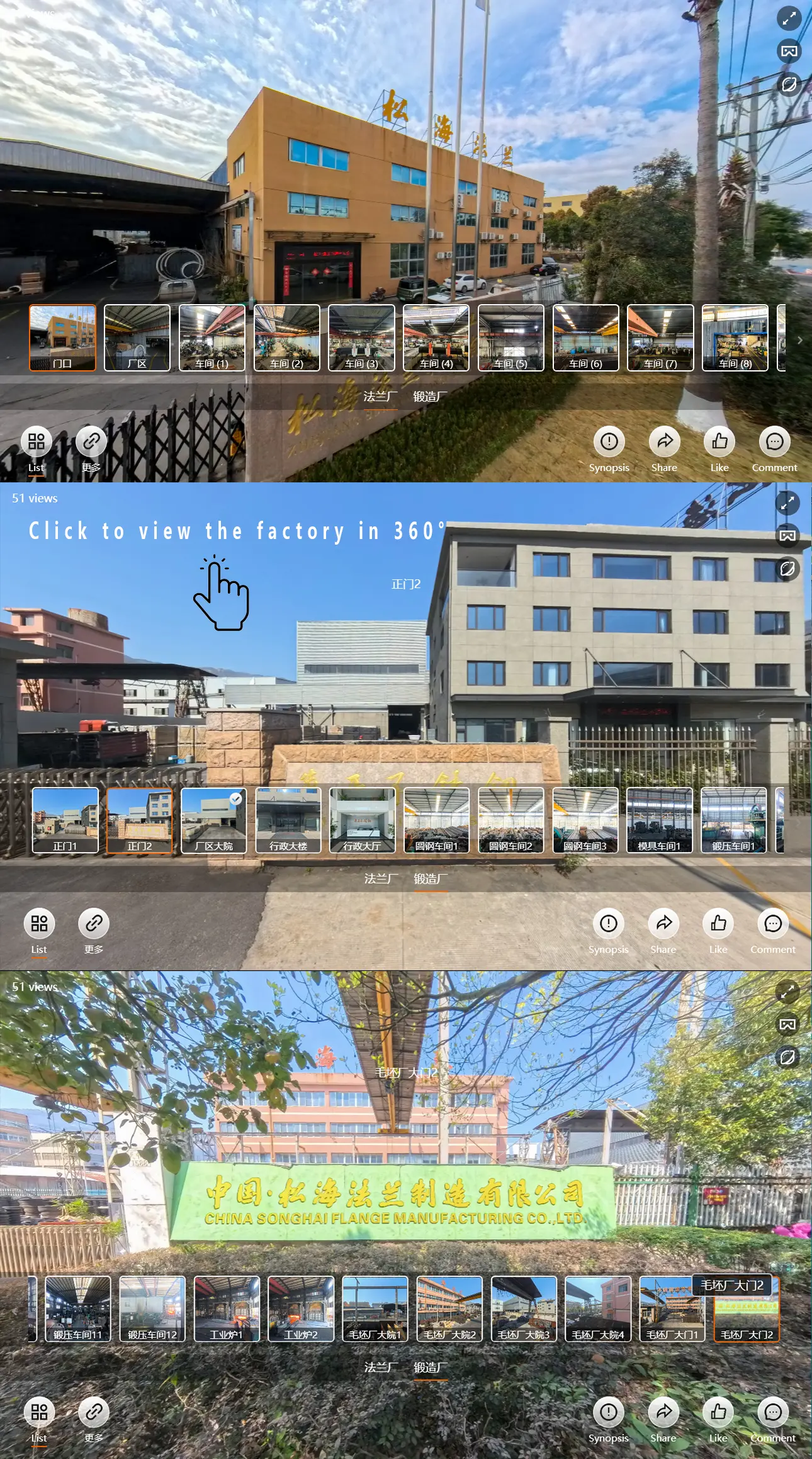
Selecting the correct stainless steel grade for flanges is critical for system integrity, longevity, and cost-effectiveness. As an experienced flange manufacturer in China, Songhai helps clients navigate material selection based on specific operational conditions.
Key Factors in Material Selection
1. Corrosion Environment
The operating environment determines the minimum corrosion resistance required:
- Atmospheric exposure: 304/304L typically sufficient
- Chloride-containing media: 316/316L or higher grades
- Acidic conditions: 904L, 254SMO, or duplex grades
- High-temperature oxidation: 310S, 321, or 347
2. Temperature Range
Temperature affects both mechanical properties and corrosion resistance:
| Temperature Range | Recommended Grades |
|---|---|
| Cryogenic (-200°C to -50°C) | 304L, 316L, 310 |
| Ambient (-50°C to 150°C) | 304, 304L, 316, 316L |
| Elevated (150°C to 500°C) | 321, 347, 316H |
| High (500°C to 800°C) | 310S, 309S, 253MA |
| Very High (800°C+) | Special alloys (Inconel, Hastelloy) |
3. Pressure Requirements
Higher pressure applications require materials with adequate yield strength:
- Class 150-300: Standard austenitic grades (304, 316)
- Class 600-900: Consider 316H or work-hardened grades
- Class 1500-2500: High-strength alloys or duplex stainless
4. Industry-Specific Requirements
Different industries have unique material specifications:
- Food & Pharmaceutical: 316L with electropolish (Ra ≤ 0.8μm)
- Oil & Gas (sour service): NACE MR0175 compliant materials
- Marine: Super austenitic or duplex for chloride resistance
- Nuclear: Special certifications and traceability
Detailed Grade Comparison
304/304L (1.4301/1.4307)
Composition: 18% Cr, 8% Ni, max 0.08% C (304) / max 0.03% C (304L)
Properties:
- Tensile Strength: 515 MPa min
- Yield Strength: 205 MPa min
- Elongation: 40% min
- Hardness: 201 HB max
Best For: General corrosion resistance, food processing, architectural applications
Limitations: Not suitable for chloride environments above 60°C
316/316L (1.4401/1.4404)
Composition: 16-18% Cr, 10-14% Ni, 2-3% Mo, max 0.08% C (316) / max 0.03% C (316L)
Properties:
- Tensile Strength: 515 MPa min
- Yield Strength: 205 MPa min
- Pitting Resistance Equivalent (PREN): ~25
Best For: Marine environments, chemical processing, pharmaceutical equipment
Advantages over 304: Superior chloride resistance due to molybdenum
321 (1.4541)
Composition: 17-19% Cr, 9-12% Ni, Ti stabilized (5×C min)
Key Feature: Titanium stabilization prevents sensitization during welding
Temperature Range: -253°C to 870°C
Applications: Aircraft exhausts, boiler components, heat exchangers
310S (1.4845)
Composition: 25% Cr, 20% Ni
Properties:
- Excellent oxidation resistance up to 1150°C
- Good carburization resistance
- Non-magnetic in annealed condition
Applications: Furnace components, radiant tubes, heat treatment baskets
904L (1.4539)
Composition: 20% Cr, 25% Ni, 4.5% Mo, 1.5% Cu
Properties:
- PREN: ~36 (excellent pitting resistance)
- Resists sulfuric acid at all concentrations
- Excellent stress corrosion cracking resistance
Applications: Chemical processing, pickling plants, seawater systems
2205 Duplex (1.4462)
Composition: 22% Cr, 5% Ni, 3% Mo, 0.15% N
Properties:
- Tensile Strength: 650 MPa min (60% higher than 316)
- PREN: ~35
- Excellent stress corrosion cracking resistance
Applications: Offshore platforms, desalination plants, chemical tankers
2507 Super Duplex (1.4410)
Composition: 25% Cr, 7% Ni, 4% Mo, 0.3% N
Properties:
- Tensile Strength: 800 MPa min
- PREN: ~43
- Outstanding pitting and crevice corrosion resistance
Applications: Seawater cooling, FGD systems, high-pressure oil & gas
Material Certification Requirements
Songhai provides comprehensive documentation:
- EN 10204 3.1: Inspection certificate by manufacturer’s authorized representative
- EN 10204 3.2: Independent inspection certificate
- Chemical Analysis: Spectrometric verification of all elements
- Mechanical Testing: Tensile, yield, elongation, hardness
- PMI Testing: Positive material identification available
Cost vs Performance Optimization
Material selection balances performance requirements with budget constraints:
Budget-Conscious Applications
- 304L for general purpose (most economical)
- Consider carbon steel with corrosion allowance where applicable
Standard Industrial
- 316L for chemical/marine (best value for corrosion resistance)
- 321 for elevated temperature
Critical Applications
- 904L for aggressive chemicals
- 2205/2507 for offshore/high-pressure
- Special alloys (Inconel, Hastelloy) for extreme conditions
Common Material Selection Mistakes
- Under-specifying for chloride exposure: 304 in seawater leads to rapid pitting
- Ignoring temperature effects: Standard grades lose strength above 500°C
- Overlooking fabrication requirements: Some grades require special welding procedures
- Forgetting lifecycle costs: Premium materials often more economical long-term
Songhai’s Material Expertise
With 30+ years of flange manufacturing experience, Songhai offers:
- Material Selection Consulting: Free technical support for optimal grade selection
- Wide Range Inventory: 304, 304L, 316, 316L, 321, 310S, 904L, 2205, 2507
- Custom Alloys: Inconel 625/825, Hastelloy C276, Monel 400
- Full Traceability: Complete MTC and documentation
- Quality Assurance: ISO 9001:2008 certified manufacturing
Get Expert Material Recommendations
Unsure which stainless steel grade is right for your flange application? Contact Songhai’s engineering team for:
- Free material selection consultation
- Corrosion resistance analysis
- Cost optimization recommendations
- Sample testing and evaluation
Keywords: stainless steel grade selection, flange materials, 304 vs 316 flanges, duplex stainless steel, corrosion resistant flanges, high temperature flanges, material certification, industrial flange supplier China
WhatsApp: +86-18658777855
Email: 1007788887@qq.com